
Have you ever wondered if teaching today really sets you up for a secure retirement tomorrow? Many teachers believe their pensions will cover everything, but the truth is, only a few actually do.
With fixed pensions and extra savings plans playing important roles, planning your financial future becomes as essential as preparing your next lesson. In this post, we share simple, practical steps to build a stable income that can grow over time. Think of it like organizing your classroom, you use every tool available to create the best setup for success.
Comprehensive Overview of Retirement Planning for Teachers

Defined-benefit pension plans offer teachers a steady income when they retire. They work by using your years of service and the average of your highest-paying years to determine how much you receive. Ideally, you start getting pension payments after around five to ten years of service. But here's the thing: only about 36% of new teachers reach this milestone, meaning many educators must look to other ways to secure their future. It’s like planning your monthly budget knowing you'll have a steady paycheck, but also preparing for extra expenses that might pop up.
Defined-contribution plans, like 403(b) and 457(b), add another layer of financial backup. These options let you invest part of your earnings before taxes. Sometimes, your school even matches some of what you put in, which means extra growth for your savings. Plus, newer Roth IRA accounts give you a chance to watch your money grow without having to pay taxes later because these accounts use after-tax dollars. By setting aside at least 10% of your salary, you build extra savings, kind of like a financial safety net that not only grows over time but also gives you nifty tax benefits.
When you combine defined-benefit pensions, 403(b) and 457(b) plans, IRAs, and Social Security, you create a strong overall strategy. The 2024 Social Security Fairness Act even changed things up by removing some old limits, so many teachers can now receive full benefits. This mix means you’re not relying on just one source of income; you’re diversifying your retirement funds in a smart way that can help reduce risk. It’s a balanced approach that lets educators feel more in control of their financial journey, allowing them to manage their money confidently and enjoy a secure lifestyle in retirement.
Understanding Educator Pension Plans for Teachers

Educator pension plans usually need you to work for five to ten years before you earn a right to the benefit. But here’s the catch, not even half of new teachers hit that mark right away, with only about 36% making it. So, it’s really important to know your vesting schedule as you plan for the future. Think of it like waiting for your favorite team to get into the playoffs; you need to play enough games to be part of that big moment.
Your pension benefit is calculated by taking the average of your highest-earning years and then multiplying it by the number of years you worked. For example, in Pennsylvania, retired teachers typically get around $24,603 each year. Keep in mind, your pension is just one piece of your retirement puzzle. If you’re on the lookout for additional ways to secure your future, consider exploring other retirement options to help balance your income down the road.
Leveraging 403(b) and 457(b) Retirement Options for Teachers
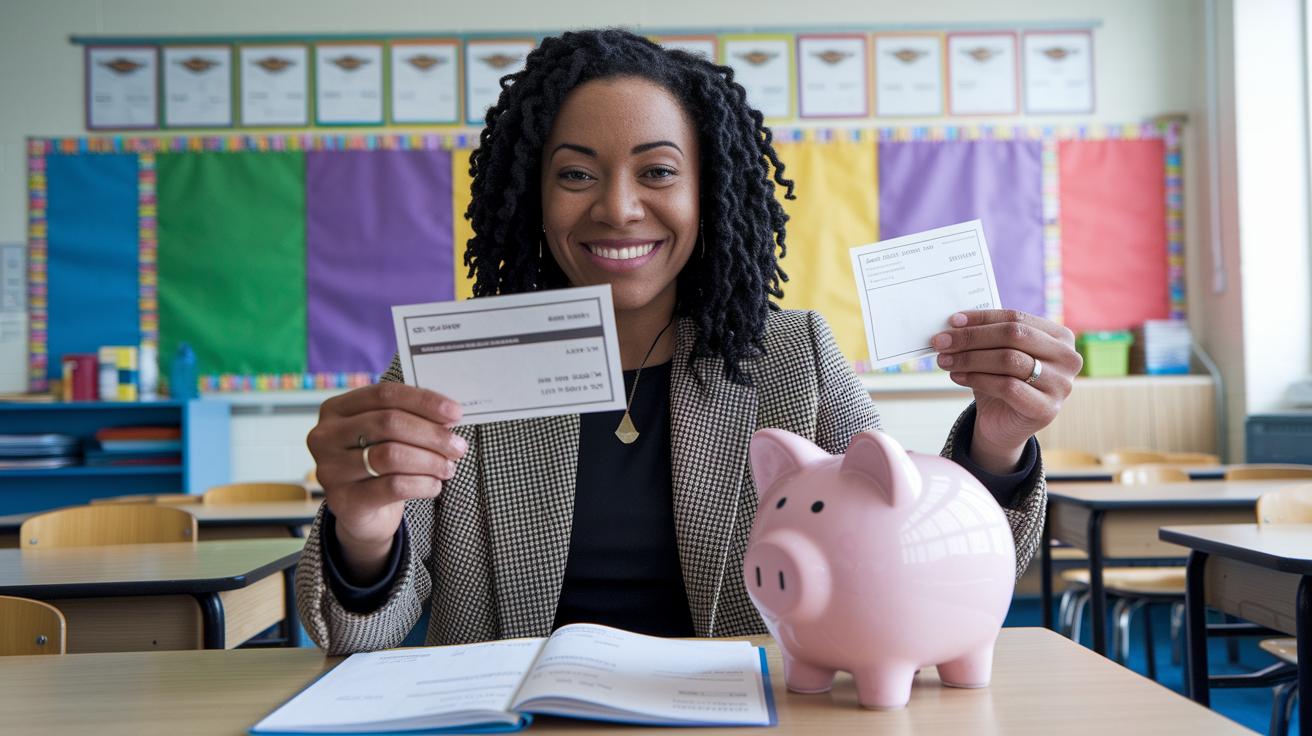
403(b) and 457(b) plans let teachers set aside part of their paycheck before taxes lower your taxable income and help your savings steadily grow. These plans offer higher limits than typical retirement accounts, making them a smart tool for boosting your retirement funds.
403(b) Explained
A 403(b) is made just for educators. It automatically takes money out of your paycheck, and you pay taxes only when you withdraw it later. Many schools even add matching funds, giving you extra savings at no extra cost. You get to choose from different investments, like simple low-cost index funds and diversified mutual funds. Imagine putting a little bit of each paycheck into a jar that gradually fills up into a solid nest egg.
457(b) Benefits
The 457(b) plan is another wise choice for public-school workers. It offers flexible rules so you can access money when you need it and catch-up options if you feel behind on saving. These features can really help boost your retirement fund over time. By selecting low-cost, varied investments in both plans, you build a strong, balanced foundation for your future income.
Supplementing Teacher Retirement with IRA and Roth IRA Strategies

A Roth IRA is like planting seeds in your financial garden. You use money that has already been taxed, which means the funds grow completely tax-free. Imagine that after a long day of teaching, you feel a sense of relief knowing your hard-earned money will continue to grow without any extra charges when you need it later.
Traditional IRAs, on the other hand, let you reduce your taxable income today. This gives your paycheck a little boost right now. Just remember that when you take money out during retirement, you'll pay taxes on those funds at your regular income tax rate.
Using both types of accounts can help create a balanced retirement plan for educators. The Roth IRA offers tax-free withdrawals in the future, while the Traditional IRA provides tax relief at the moment of contribution. This mix gives you the freedom to adjust your withdrawals as your needs change over time. With annual contribution limits of $6,500, plus an extra $1,000 for those over 50, you can carefully plan your contributions to fit your financial goals.
Integrating Social Security into Teacher Retirement Planning

If you’re planning for retirement as a teacher, you might already know that Social Security rules can vary quite a bit depending on where you work. In some states, public-school systems have chosen not to join Social Security. This means that if you’re in one of those states, you’ll need to make extra plans to build a secure retirement fund, sort of like putting aside more money when your favorite savings route isn’t available.
The Social Security Fairness Act of 2024 really changed things. By removing tricky offsets such as the Windfall Elimination Provision, teachers now have a better shot at receiving full Social Security benefits. It’s a big help in making retirement income more dependable.
Mixing your Social Security benefits with a pension and personal savings can give you a nice, balanced income stream. Have you ever thought about how combining different sources of income might ease your worries later on? It’s a good idea to keep an eye on your state’s rules and adjust when you start taking benefits to smoothly fill any gaps in your retirement income.
Teacher Retirement Savings Roadmap and Milestones

Setting clear savings milestones can help guide you through your teaching career and life beyond the classroom. Think of each goal as a friendly sign along the way, reminding you to adjust your plans as your financial needs change. For instance, you might set a goal to have enough money saved to cover 3 to 6 months of expenses by the time you're 30. This acts like a cushion for those unexpected bumps in life.
- Build 3-6 months of emergency savings by age 30.
- Save up 50% of your retirement funds goal by age 40.
- Achieve full pension vesting by your tenth year on the job.
- Put aside at least 10% of your salary every year to help grow your retirement fund.
It’s important to check in on your savings regularly, much like looking at a map on a long drive. Each review lets you adjust your plans for a pay raise, changes in family needs, or market ups and downs. Taking time each year to review your employer plan, personal savings, and IRA investments can keep your strategy on track. Remember, these checkpoints are flexible guides to help you build a balanced and secure retirement, ensuring you have the funds needed to enjoy life after teaching.
Using Tools and Calculators for Teacher Retirement Planning

Online calculators are a great way to see how small changes, like adjusting your savings rate or extending your work years, can impact your retirement timeline. They help you picture the effect of your financial decisions in a clear, simple way.
Age calculators are designed to show you the possible day you might retire by taking into account your current savings and how they could grow over time. Contribution estimators break down exactly how much extra you need to save from each paycheck. And benefit simulators use details like your years of service and your final average salary to give you an idea of potential pension or 403(b) payments. For example, one tool might suggest, “Increase your monthly savings by 2% for a noticeable boost in your retirement funds.”
Many state education sites and nonprofit groups offer these digital planning tools for free. They turn complicated numbers into everyday insights, making it easier and less stressful to adjust your plans and move confidently toward a secure retirement.
FAQs on Retirement Planning for Teachers

Q1: What are common misconceptions about teacher pension eligibility?
A1: Many people believe teachers need 10 years of service to earn pension benefits. But that’s not true. Most pension plans start vesting after five years. Imagine it like earning your spot on the team as soon as you prove yourself in those early years. For full details, visit our pension eligibility section.
Example: Think of it like securing a starting spot on your team right from the beginning.
Q2: How can I optimize my 403(b) contributions?
A2: You can surpass basic limits by considering catch-up contributions if you qualify. And if your employer offers a match, try to contribute enough to get the full benefit. For the most up-to-date strategies, check out our 403(b) planning guide.
Example: Picture your employer’s match as a turbo boost for your savings plan.
Q3: What factors differentiate a Roth IRA from a Traditional IRA?
A3: The main difference is when you pay taxes. A Roth IRA requires taxes upfront, so withdrawals later are tax-free. A Traditional IRA gives you a tax break now, but you pay taxes when you withdraw the money later. Think about your income today versus what you expect in the future. For more detailed scenarios, refer to our IRA guide.
Example: Imagine a Roth like planting a tree that grows tax-free, while a Traditional IRA gives you a discount now with taxes coming later.
Q4: How can Social Security complement my teacher retirement benefits?
A4: New rules have boosted Social Security benefits for educators. Pairing these improvements with your pension can give you a well-rounded retirement plan. More tips on merging these sources are in our Social Security integration guide.
Example: Picture Social Security and your pension as two streams that join together into one robust river of income.
Q5: What check points should I regularly review in my retirement plan?
A5: Break your plan into clear checkpoints:
| Checkpoint | Action |
|---|---|
| Enrollment Dates | Review your pension and account start dates |
| Savings Progress | Aim to save about 10% of your income |
| Annual Check | Set a yearly review for your retirement plan |
| Advisor Consultation | Talk to a fee-only advisor during major financial shifts |
Example: Think of this like checking off items on a shopping list to ensure your plan stays on track.
Final Words
In the action, we covered key pieces of retirement planning for teachers. We looked at how pensions, 403(b)/457(b) plans, IRAs, and Social Security work together. Each part builds a solid foundation for both immediate savings and long-term peace of mind.
Taking control of your financial future is achievable with a clear roadmap in hand. With careful retirement planning for teachers, every step you take adds up to a more secure, confident tomorrow.
FAQ
What are free retirement planning options for teachers?
The free retirement planning options for teachers include online tools, consultations provided by school districts, and seminars that explain pensions, 403(b) plans, and savings strategies in clear, simple terms.
What retirement planning is best for teachers?
The best retirement planning for teachers mixes a secure pension, a 403(b) or 457(b) plan, IRAs, and Social Security benefits to build a well-rounded income stream for later life.
What should a retirement planning checklist for teachers include?
The retirement planning checklist for teachers should include steps like checking pension vesting rules, reviewing contribution limits for 403(b) and IRAs, setting emergency fund goals, and scheduling regular plan reviews.
What are the best retirement plans for teachers by state?
The best retirement plans for teachers by state consider how pension benefits differ regionally, the details of 403(b) options, Social Security rules, and state-provided planning resources for educators.
How does the teacher 403(b) retirement plan work?
The teacher 403(b) retirement plan works by allowing teachers to contribute pre-tax dollars from their paycheck, potentially earn an employer match, and invest in options that grow tax-deferred until retirement.
How many years do teachers need to work to receive a full pension?
The full pension for teachers usually requires five to ten years of service to vest, though continuing to work longer raises the overall pension benefit.
What is the average teachers’ pension after 20 years?
The average teachers’ pension after 20 years depends on years of service and final salary, often providing a steady, reliable income that supplements other retirement savings.
What retirement advice is suggested for teachers?
The retirement advice for teachers stresses starting to save early, combining pension plans with 403(b) or 457(b) contributions and IRAs, and reviewing plans regularly to adapt to changing personal needs.
What is the best overall retirement plan for teachers?
The best overall retirement plan for teachers brings together a dependable pension, options for additional savings through 403(b) or 457(b) plans, strategic IRA use, and coordination with Social Security.
What does the $1000 a month rule for retirement mean?
The $1000 a month rule for retirement means aiming to secure a steady stream of around $1000 in monthly income from various retirement sources to cover essential expenses.
What is the typical retirement age for teachers?
The typical retirement age for teachers falls between 60 and 65, influenced by state policies and each teacher’s personal financial readiness.
How much should a teacher have saved for retirement?
A teacher should strive to have saved between one and two times their annual salary by retirement to help maintain financial security alongside pension and Social Security benefits.