
Have you ever wondered why grocery prices change from year to year? Look at inflation, a slow rise in prices, and you'll see trends that feel more hopeful than worrying. For example, rates went from 4.12% in 2023 to 2.95% in 2024. This change might seem steady rather than wild. Dig a little deeper and you'll find that everyday spending can become easier to predict and even help your savings grow. Let's take a closer look at these trends and what they could mean for your future.
10-Year Inflation Overview and Historical Trend Analysis

Over the past ten years, we’ve seen how inflation has shifted and changed the value of money. Inflation simply shows how prices on everyday items increase or decrease over time. For instance, notice that in 2023 the rate was 4.12%, and by 2024 it dropped to 2.95%. This change gives us a peek into how things like new technology, worldwide supply chains, and government policies can affect what we pay.
Looking at these trends can feel a bit like watching a family budget change over the years. It helps you see how well you might keep up with rising costs. When prices go up slowly, it means the steady growth of your savings can keep pace with expenses. If you ever wonder why things cost more sometimes, these insights might help explain the shift.
Below is a table highlighting key inflation rates over the last decade:
| Year | Inflation Rate |
|---|---|
| 2014 | 2.5% |
| 2019 | 1.8% |
| 2020 | 1.2% |
| 2023 | 4.12% |
| 2024 | 2.95% |
Historically, if you look back from 1913 to 2023, the average annual inflation rate has been about 3.27%. In plain terms, while you might see prices go up a bit each year, wage increases and overall growth often match that change. It’s like setting a steady pace in a long race, small, continuous adjustments that help you plan your money better.
Next, when you see these numbers, remember they’re more than just figures. They’re a handy way of understanding how big trends in our economy can affect your wallet, helping you plan for the future with a clearer picture of real-life expenses.
Key Drivers Behind 10-Year Inflation Trends

It’s important to get a grip on what makes prices change over a long stretch like ten years. When you break it down, these factors reveal where the pressure on prices comes from and how everyday costs are shaped. We’re looking at data from the CPI-U by the Bureau of Labor Statistics, and a historical average of about 3.27% shows that inflation has deep, lasting roots in our economy.
Think of these key triggers like ingredients in a recipe for rising prices:
- Changes in money management (monetary policy shifts)
- Snags in delivery and production (supply-chain disruptions)
- Pressure in the job market (labor market pressures)
- Extra government spending (fiscal stimulus)
- Big swings in the cost of energy (energy-price swings)
Each one plays a part in the bigger picture, affecting what you pay today and what you might pay down the road. Sometimes, easing up on money supply or tweaking fiscal policies can lower or raise the inflation rate, which in turn changes how far your dollars go over time.
Impact of 10-Year Inflation on Consumer Purchasing Power

Ever notice that a dollar today doesn't seem to do as much as it used to? Inflation slowly eats away at your money's strength so that each dollar doesn’t travel as far. When prices inch up, even in small steps over years, it can really change the way you handle your household budget.
Between January 2023 and January 2024, U.S. prices went up by about 3%. That might not sound huge at first, but if your income doesn’t grow with those prices, you'll feel it when buying everyday things. Think about it, if your paycheck stays the same while prices rise, it’s like trying to fill a bucket with a hole in it.
You can see these changes in many parts of your spending life. Housing costs might creep up slowly, your grocery bill could get a little steeper, and even bills for energy or healthcare might go on a roller coaster. All these shifts mean that each section of your spending plays a part in how your money stretches over time.
10-year inflation: Trends that Spark Optimism

Thinking about the future of inflation can really help you manage your money smarter. Experts blend past trends with future models to get a feel for how prices will move in the next ten years. For example, many predictions use a 2.5% yearly inflation rate based on a 25-year average. This guess is a cornerstone for many tools that give us hope for long-term price stability.
Breakeven Yield Approach
TIPS breakeven spreads give us a peek at what the market thinks about future inflation. When these spreads widen, it means investors expect prices to rise faster. When they narrow, it suggests things might stay steadier. It’s like checking your pulse, this method tells us what we might face with everyday costs.
Federal Reserve Projections
The Federal Reserve also offers long-run inflation estimates that add another viewpoint. They mix past trends with current economic data, such as consumer spending and jobs, to forecast inflation. This detailed approach helps us see how monetary policies might shape inflation over the next decade.
Econometric and Simulation Models
Econometric models use statistics and key economic markers to predict inflation. These models run different scenarios, like changes in growth, wages, or energy prices, to show several possible outcomes. This simulation approach gives analysts the flexibility to explore how different factors can change future inflation trends.
Bringing these methods together gives us a balanced view of where inflation could head. By looking at market signals, official projections, and statistical models, we get a clearer picture of long-term price stability. This insight not only directs us in our daily financial decisions but also keeps us optimistic about planning for the future.
Regional and Sector Variations in 10-Year Inflation Rates
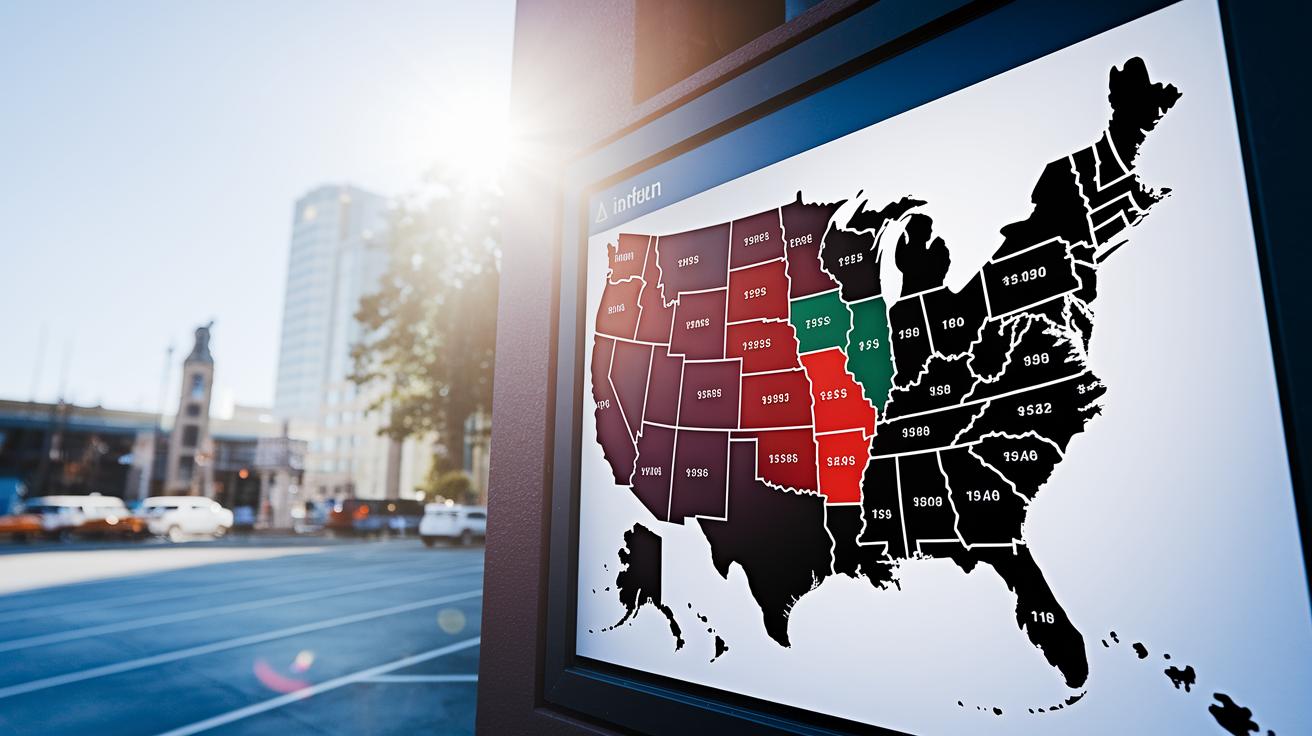
Different parts of the United States have felt the pinch of inflation in their own unique ways over the last ten years. When you look at interactive maps, you can see that Midwestern states have enjoyed some of the smallest hikes in the Consumer Price Index. This shows that prices aren't rising the same everywhere, and comparing regions can really shine a light on which areas remain more budget-friendly. It also reminds us that local market conditions and everyday economic activities have a big say in how fast prices move.
When you break things down by sector, the impact of inflation becomes even clearer. For instance, housing costs are on the rise, with higher prices and small rent increases, even though some places still have mortgage rates that don't change much. In healthcare, costs generally climb as new technology and growing demand push them up, while education expenses show a mix of trends from one region to another. These insights help form a broader picture of how inflation plays out in different parts of our lives, making it easier for everyone to understand the ongoing economic changes.
All this regional and sector information matters when you compare different markets. Noticing which areas keep prices steady and which see bigger jumps helps both experts and everyday people get a feel for how healthy a local economy really is. In truth, this kind of clear, detailed look at inflation can guide smarter budgeting and better long-term planning, proving that the effects of inflation vary a lot across our nation.
Applying 10-Year Inflation Insights to Long-Term Financial Planning

Planning for a bright financial future can seem tough when inflation slowly makes your money worth less. Over ten years, even small price hikes can add up, affecting how much you spend every day and the amount you save. Think of it like tweaking a favorite recipe, you have to adjust the ingredients (your earnings and costs) to keep everything balanced.
When you plan for retirement or long-term savings, it makes sense to check your goals with inflation in mind. Research tells us that even if wages or home values rise, they may not keep up with higher costs. For example, if you did not plan for a steady yearly increase, your money might not stretch as far when you retire. Changing your savings plan now can help keep your money's buying power strong.
One helpful trick is using simple forecasting methods. Look at past trends and use a modest annual rate, like about 2.5%, to build a realistic budget. Imagine planning your monthly expenses like putting together a set menu, where every item is carefully chosen to complete the meal.
Taking smart steps today can protect your true wealth for the next decade. You might think about putting money into areas or assets that do not change prices too quickly and keeping your plans flexible. Checking your strategy often and staying updated will help you keep pace with rising costs and preserve the real value of your savings.
Final Words
In the action, we explored the trends shaping decade price dynamics, examined economic drivers and consumer purchasing power, and compared forecasting models. We looked at regional and sector differences while offering tips for smarter long-term money management.
This analysis shows how 10-year inflation shapes financial decisions, giving you fresh ideas for planning ahead. Keep learning about market shifts and refining your strategies. Every step builds your confidence and moves you toward a more stable and empowered financial future.
FAQ
What does a 10 year inflation calculator do?
The 10-year inflation calculator shows how prices change over a decade by applying historical inflation data to current values, helping you estimate future costs in today’s money.
What was the 10 year inflation in 2022?
The 10-year inflation figure for 2022 highlights that year’s price changes within a decade-long trend, providing insights on how costs evolved relative to other years.
What does a 10 year inflation graph illustrate?
The 10-year inflation graph illustrates consumer price changes over time by plotting estimated data points, making it easier to compare trends across different years.
What was the 10 year inflation in 2021?
The 10-year inflation data for 2021 reflects that year’s shifts in consumer prices within the broader long-term trend, shedding light on how inflation trends develop over time.
What do 10 year inflation predictions and outlook show?
The 10-year inflation predictions use historical trends and economic estimates to forecast future price changes, offering guidance for planning how rising costs might impact your budget.
What is the U.S. inflation rate by year?
The U.S. inflation rate by year measures annual changes in consumer prices using the CPI, allowing you to track how living costs have shifted historically and compare them over time.
What is the 10-Year Breakeven Inflation Rate?
The 10-Year Breakeven Inflation Rate is determined by comparing yields of regular and inflation-protected bonds, reflecting market expectations for average inflation over a decade.
What is the inflation rate for the past 10 years?
The past 10-year inflation rate represents the average annual increase in consumer prices, drawn from long-term CPI data that helps show how much everyday expenses have risen.
Does inflation double every 10 years?
The idea of inflation doubling every 10 years isn’t fixed because annual rates vary. Actual changes depend on a mix of economic factors and historical trends that shift over time.