
Have you ever paused to think that your company’s numbers might hide clues to its growth? The income statement, balance sheet, and cash flow statement each tell part of your money story. When you connect the dots, you get easy insights that can really push your business forward.
In this post, I break down what each report does and explain how they work together. Understanding these documents can help you make smarter moves for your business. Get ready to see your company’s financial journey in a fresh, empowering light.
Understanding Financial Statements: Roles and Interconnections

Think of the income statement, balance sheet, and cash flow statement as three ways to see a company’s money story. The income statement shows how much money came in and went out over a set time, giving you a clear picture of profit and loss. The balance sheet, on the other hand, freezes a moment in time to display everything the company owns versus what it owes. And the cash flow statement tracks the movement of cash from everyday business activities, investments, and financing, helping you see how liquid the company really is.
The income statement mainly helps managers and investors by showing how well the company turns its revenue into profit. The balance sheet is the go-to for regulators and internal teams to check if the company is financially sound and able to cover its bills. Meanwhile, the cash flow statement is all about the here-and-now, showing if there's enough cash to keep the business running and to grow.
These statements are all linked together in neat, logical ways. For example, the net income from the income statement rolls over into the shareholders’ equity on the balance sheet, and it also shows up as the starting point for operating cash flow. Adjustments like depreciation, a cost that doesn’t actually take cash from your pocket, and changes in working capital connect everything seamlessly. This integration helps you see how profits, assets, and cash all tell the same financial story.
Income Statement Fundamentals: Profit Reporting and Expense Breakdown

The income statement is like a report card for your business that shows how well you turn sales into profit. It’s put together every month, every few months, or once a year. Managers, investors, and analysts use it to track how you're doing over time. For example, a small business might check this report every quarter to see its progress and plan for the future.
The report starts with your total sales revenue, then subtracts the cost of making or buying your products. This subtraction gives you your gross profit, which is a key step in understanding how efficiently you're turning sales into money. Think of a local shop that figures out its gross profit by taking away the cost of products from its total sales.
Next, operating expenses like salaries, rent, and utilities are taken into account. When you subtract these costs, along with other items like interest and taxes, you end up with the net income. This bottom-line number tells you how profitable your business truly is and helps guide your next steps.
Balance Sheet Fundamentals: Asset, Liability, and Equity Overview
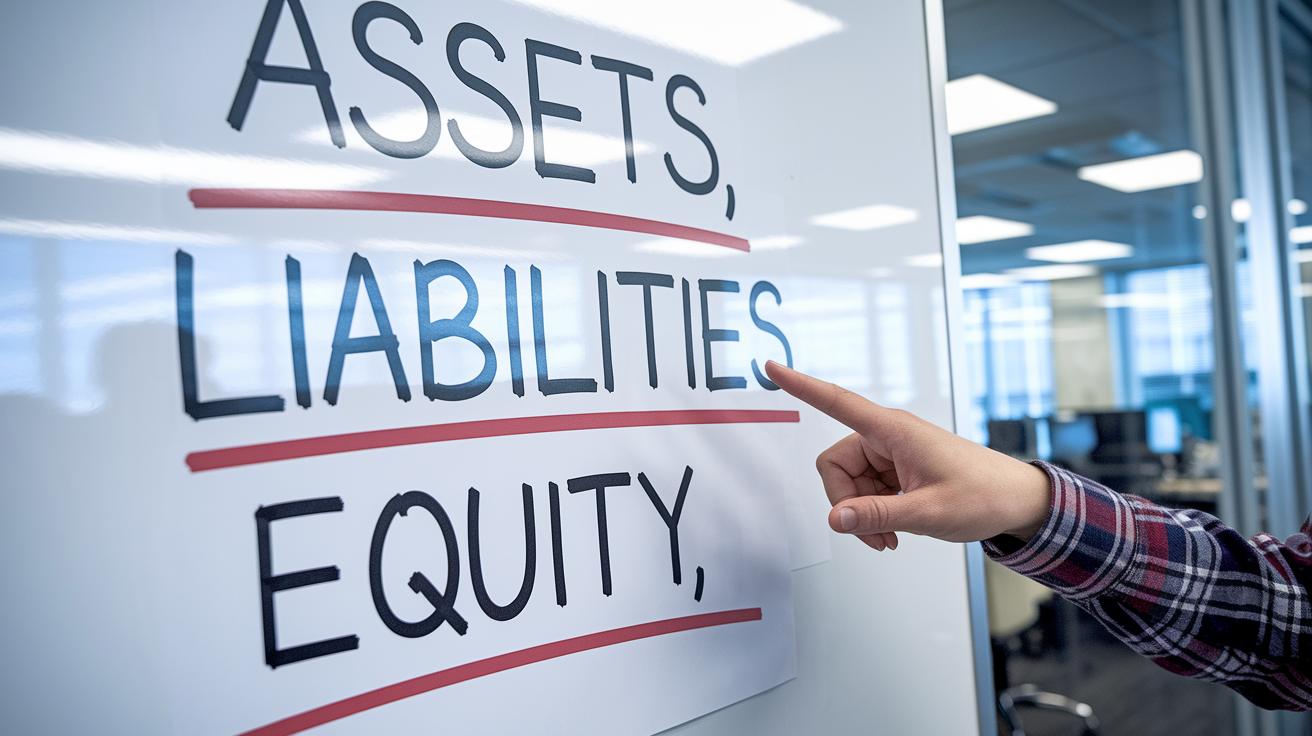
The balance sheet is like a quick snapshot of a company's financial health. It shows what the company owns, what it owes, and what’s left after paying off its bills. This simple tool helps managers and investors see if the company can handle its short-term expenses while staying strong over the long run. Have you ever looked at a balance sheet and instantly felt confident about a company's ability to pay its debts and still have room to grow?
Assets are divided into two groups. Current assets are things like cash, money owed to the company, and inventory, basically, items that can be quickly turned into cash. On the other hand, non-current assets include things like property, equipment, and other resources that the company plans to use for many years. Think of these as the long-term investments that keep the business running.
Liabilities work in a similar way. Current liabilities are bills and debts that need to be paid soon, like payables and short-term loans. Non-current liabilities are the longer-term stuff, like big loans or lease obligations set for the future. After you subtract these liabilities from the company's assets, what’s left is called equity, which represents the owners’ share of the business. Essentially, it all adds up in the simple equation: Assets = Liabilities + Equity.
| Category | Description |
|---|---|
| Current Assets | Cash, money owed, and inventory |
| Non-Current Assets | Property, equipment, and long-term resources |
| Liabilities & Equity | Bills, debt, and owners’ share |
Cash Flow Statement Essentials: Tracking Cash Inflows and Outflows

The cash flow statement shows you exactly how money moves in your business. It breaks down into three parts: operating activities, investing activities, and financing activities. Operating activities cover the cash from your main business, like money from sales or payments for services. Investing activities include cash spent on buying assets or cash earned from selling them. Financing activities track money from loans, repaying debt, or dealings with owners. Think of it as a diary that records every cash step, giving you a clear view of your liquidity.
When it's time to create your statement, you have two choices: the direct method or the indirect method. With the direct method, you list every cash receipt and payment, like “We received $50,000 from customer payments this month.” The indirect method starts with your net income and then adjusts for things like depreciation (a method to spread out the cost of assets over time). Both ways have their perks, the direct method is very clear, while the indirect method is usually easier because it uses existing financial records.
Keeping an eye on these cash flows is key for planning and making smart money decisions. By watching how cash comes in and goes out, you can better plan for growth, manage debts, and be ready for surprises. This regular check helps you stay flexible and prepared, whether you're facing planned challenges or unexpected expenses.
Linking Profit, Assets, and Cash: Building a Three-Statement Model

Begin by predicting your income and expenses over a set period. Next, take the net income and add it to your balance sheet as an increase in equity. This simple step links your earnings to your balance sheet and later helps you figure out your cash flow. For example, if you expect a profit of $50,000, use that number to adjust your assets and liabilities, which then influences the cash available for your operations.
Net income plays a big role in this connection. It bumps up the shareholders' equity on your balance sheet and also kick-starts the calculation for operating cash flow on your cash flow statement. Think of it as the thread tying profit to cash. When your income statement shows a higher profit, both your equity and your daily cash flow improve, making everything work in sync.
Depreciation and amortization are non-cash expenses, which means they lower your profit on paper without actually reducing your cash. Later, these amounts are added back on the cash flow statement, revealing the true cash available. Adjustments in working capital, such as changes in accounts receivable, inventory, and accounts payable, further refine your cash flow by reflecting real money movements.
Finally, include financing activities like new debt, repayments, or equity issuances. These transactions appear on the balance sheet by altering liabilities and equity and also show up on the cash flow statement as money coming in or going out. This comprehensive approach ties all your financial documents together into one clear three-statement model.
Practical Applications of Financial Statements in Business Analysis

Businesses regularly take a close look at their financial statements, whether monthly, quarterly, or yearly, to make smart choices. They use these reports to shape budgets, forecast future trends, work out values, and manage risks. For instance, a company might review its income statement to plan for expected costs and set clear sales targets, while its balance sheet shows if there’s enough cash on hand to cover upcoming bills. Checking liquidity and solvency regularly not only helps with day-to-day decisions but also guides longer-term plans like expanding or cutting costs. Simply put, turning numbers into clear action steps keeps the business moving in the right direction.
Investors, lenders, and other partners rely on an honest look at a company’s performance to know where to put their money. They check things like profit margins, how cash flows in and out, and the overall strength of the balance sheet to judge a company's financial well-being. For example, a lender might dig into the cash flow statement to see if the company can comfortably meet payment schedules, while an investor might study past revenue and spending to gauge future growth. These clear figures give everyone a quick snapshot of how well the company is managed, making these reports key tools for planning and building trust.
Audited vs Unaudited Financial Statements
Audited financial statements have been checked by an independent third party, which reassures investors and regulators about their accuracy and adherence to accounting rules. On the other hand, unaudited statements are created in-house and are usually used for early reviews, helping management make quick fixes before the final reports come out. While audited reports build confidence, unaudited ones offer a flexible, early look at the numbers for internal decisions.
Final Words
In the action, we broke down the income statement, balance sheet, and cash flow statement to show how they work together. Our discussion illustrated that net income, depreciation, and working capital changes tie everything together, making the interplay of numbers easy to follow.
Using three financial statements can help you see how profit, assets, and cash connect. With three financial statements, you can feel more confident making everyday financial decisions, paving the way to a brighter financial future.
FAQ
What are examples of the three financial statements?
The three financial statements examples refer to the income statement, the balance sheet, and the cash flow statement. They help you see profit, net worth, and how cash moves through a business.
How are the three financial statements linked?
The interconnection among the financial statements is shown when net income from the income statement flows into the balance sheet’s equity and into the operating cash flow, with working capital changes connecting them.
What is the income statement and its purpose?
The income statement explains how a company’s revenue minus expenses leads to net income. It reports profit details over a period and guides users in evaluating operational performance.
Which financial statement shows net worth?
The statement showing net worth is the balance sheet, as it lists assets and liabilities to display equity, giving you a snapshot of the company’s overall financial health.
What are the basic types of financial statements?
The basic types of financial statements include the income statement, balance sheet, and cash flow statement. These core reports provide details on profit, net worth, and cash management.
What is a basic three-statement financial model?
A basic three-statement financial model combines income, balance sheet, and cash flow reports into one framework, giving a cohesive view of profit, assets, and cash movements to aid decision-making.
How can I find financial statements in PDF format?
Financial statements in PDF format are typically available on company websites or through regulatory filings, offering a printable version that simplifies review and sharing of detailed financial data.